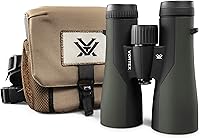
7 Best Binoculars for Bird Watching (October 2026)
The best binoculars for bird watching include the Vortex Triumph HD 10x42 for distant birds, the Vortex Diamondback HD 8x42 for scanning habitats, and the Celestron Nature DX 8x42 for feeder birders.
On this page (8 sections)
- The best binoculars for bird watching by use
- How we chose binoculars for bird watching
- Which binocular features matter most for birding?
- How to choose the right birding binoculars
- How should you set up binoculars before birding?
- Which mistakes make bird watching harder?
- How should you clean and store birding binoculars?
- Which binoculars should you choose for bird watching?
The Vortex Triumph HD 10x42 is our top pick among the best binoculars for bird watching when distant detail is your main goal. For a first pair used across woods, parks and feeders, start with the easier handheld view of an 8x42.
The Diamondback HD suits broad scanning, the Nature DX adds useful close focus for garden subjects, and the Nikon PROSTAFF P3 8x42 gives glasses wearers the most eye relief here.
Choose around the birds you watch most often. A large image helps little if you struggle to find the bird or keep the view steady.
If you're weighing magnification first, see our guide to choosing binocular size for bird watching and the comparison of 8x42 vs 10x42 binoculars.
If you wear glasses, our guide to binoculars for glasses wearers covers eye relief and eyecup fit.
Our picks at a glance
-
1

-
2

-
3

The best binoculars for bird watching by use
Choose the Triumph for distant birds, the Diamondback for scanning, or the Nikon P3 8x42 for glasses fit. The highest score identifies our leading pick for its intended use; your habitat and eye position can make another model the better buy.
Vortex Triumph HD 10x42: Best for distant birds
- 10x magnification
- 42 mm objective lenses
- Fully multi-coated lenses
- Included GlassPak harness
Choose the Triumph for distant perched birds and walks where you want binoculars within easy reach. Its included GlassPak harness supports carry between viewing stops.
Pros
- Extra magnification for distant subjects
- Included adjustable GlassPak harness
- Waterproof and fogproof
Cons
- More visible hand movement than with 8x
- Less eye relief than the Nikon PROSTAFF P3 8x42
The Triumph is the strongest fit here for birders who regularly study birds across ponds, fields or shorelines. Its 10x magnification makes perched subjects appear larger, useful when you're looking for a bill shape or a marking on a distant bird.
Fully multi-coated lenses and an HD optical system form the optical package. Adjustable rubber eyecups and a diopter let you set the view for your eyes, while rubber armor adds grip around the polycarbonate body.
The included GlassPak harness is useful on walks with repeated stops. Adjust it so the binoculars sit within easy reach rather than swinging low against your stomach.
Skip the Triumph if your main challenge is locating quick birds in nearby branches. Lower magnification is a better starting point when you often lose the subject as you raise the binoculars.
For distant viewing, tuck your elbows against your body or use a safe, stable support. A steadier image helps you use the extra magnification.
Vortex Diamondback HD 8x42: Best for scanning habitats
- 8x magnification
- 393 ft field of view at 1,000 yd
- Dielectric prism coating
- Included GlassPak harness
The Diamondback suits birders who spend more time finding birds than studying distant ones. Its broad field and lower magnification help with scanning and following movement.
Pros
- Broad field of view
- Armortek exterior lens coating
- Waterproof and fogproof
Cons
- Less magnification for distant birds
- Less eye relief than the Nikon PROSTAFF P3 8x42
The Diamondback is a strong choice for birders who spend much of an outing searching for movement. Its 393 ft field of view at 1,000 yd gives you room around the subject, useful when a bird hops away from the branch where you first saw it.
The optical package includes fully multi-coated lenses and a dielectric prism coating. Vortex also adds Armortek to the exterior lenses to help protect against scratches, oil and dirt, though careful cleaning still matters.
A GlassPak harness is included for carry, and argon purging with o-ring seals provides weather protection. Those features suit regular routes where the binoculars stay with you through changing conditions.
Choose this model for mixed habitats rather than buying extra magnification by default. Skip it if your usual birds are distant and stationary, and you already know you can hold a stronger view steady.
Our explanation of what the numbers on binoculars mean helps separate image size from how much of the scene you can see.
Celestron Nature DX 8x42: Best for feeder birders
- 8x magnification
- 6.5 ft close focus
- Phase-coated BaK-4 prisms
- Fully multi-coated lenses
Its close focus suits nearby feeder birds, butterflies and garden subjects. The broad view also gives you room to follow birds moving between branches.
Pros
- Focuses as close as 6.5 ft
- Phase-coated BaK-4 prisms
- Waterproof and nitrogen-purged
Cons
- Tripod adapter is not included
- Less eye relief than the Nikon PROSTAFF P3 8x42
The Nature DX is especially useful for feeder watchers and birders who also enjoy butterflies or garden wildlife. Its 6.5 ft close focus lets you study nearby subjects that would fall inside the focus limit of some binoculars.
That matters when your favorite viewing spot overlooks a small garden rather than a distant wetland. Measure the distance from your usual seat to the feeder before choosing, since even this model needs some space to focus.
Fully multi-coated lenses and phase-coated BaK-4 prisms give it a clear optical distinction from the Outland X. Its broad angular view also suits following birds as they move between shrubs or cross open sky.
Choose it for a mix of close observation and general birding. Skip it if you need to focus on a feeder closer than its stated limit, or if long eye relief is your first concern.
It can attach to a tripod with a separate adapter. That option makes more sense for a fixed garden watch than for constantly changing viewing angles along a trail.
Vortex Crossfire HD 8x42: Best for regular trail walks
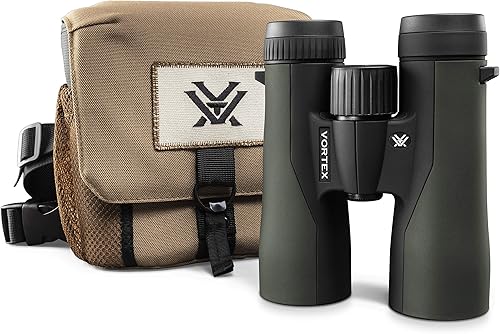
- 8x magnification
- Included GlassPak harness
- Fully multi-coated lenses
- Tripod adaptable
The Crossfire combines lower magnification with a harness for walking routes that involve frequent viewing stops. Glasses wearers should give its shorter eye relief special attention.
Pros
- Included GlassPak harness
- Waterproof and fogproof
- Tripod and car window mount compatibility
Cons
- Shortest eye relief among these picks
- Less magnification for distant subjects
The Crossfire fits regular walking routes where you want an 8x view and harness carry in one package. The included GlassPak helps keep the binoculars close between stops, while rubber armor provides a gripping surface.
Its fully multi-coated lenses, nitrogen purging and o-ring seals cover the main optical and weather features needed for outdoor use. Tripod and car window mount compatibility also give you options for watching from a fixed position.
The key reason to pause is its 14 mm eye relief, the shortest figure in this group. Glasses can hold your eyes too far from the eyepieces, leaving you unable to see the full field even when the center looks sharp.
Choose it if the eyepieces fit your face comfortably and the carry setup suits your walks. Skip it if you must keep glasses on and already struggle with restricted views through binoculars.
The Diamondback also includes a harness, so compare those two by fit and optical features. The harness alone should not settle that choice.
Nikon PROSTAFF P3 8x42: Best for glasses wearers

- 8x magnification
- 20.2 mm eye relief
- Turn-and-slide eyecups
- Multilayer-coated lenses
Start here if glasses make it hard to see a binocular's full view. The long eye relief and adjustable eyecups give you room to find a useful eye position.
Pros
- Longest eye relief in this group
- Turn-and-slide eyecups
- Waterproof and fogproof
Cons
- Narrower field than the Diamondback HD 8x42
- Less magnification for distant birds
The PROSTAFF P3 8x42 is the first model here to consider if you keep glasses on while birding. Its 20.2 mm eye relief gives your eyes more room behind the eyepieces than the other picks.
Turn-and-slide eyecups help you set that distance. Start with them lowered when wearing glasses, then adjust until you can see the full circular view without dark patches moving across it.
Nikon pairs multilayer-coated lenses with a silver-alloy prism coating. Its fiberglass-reinforced polycarbonate body has rubber armor, and the central focus wheel allows focus changes as birds move between distances.
Choose it when seeing the whole image comfortably matters more than having the broadest field in the group. Its view is narrower than the Diamondback's, but a wider field offers little benefit if your glasses prevent you from seeing its edges.
Skip it if distant, stationary subjects dominate your outings and you want more image size. Our guide to binoculars for glasses wearers explains the fit checks to make before deciding.
Nikon PROSTAFF P3 10x42: Best for stationary lookout birding

- 10x magnification
- 367 ft field of view at 1,000 yd
- Turn-and-slide eyecups
- Center focus wheel
This Nikon suits birders who pause at a lookout to study distant subjects. Choose it when extra image size matters more than the broader view of its 8x42 sibling.
Pros
- Extra magnification for distant subjects
- Waterproof and fogproof
- Adjustable eyecups
Cons
- Less eye relief than the Nikon PROSTAFF P3 8x42
- Hand movement is more visible than with 8x
The PROSTAFF P3 10x42 suits birders who spend time at a lookout studying distant birds. It is a useful alternative to the Triumph if you prefer Nikon's turn-and-slide eyecups and central focus arrangement.
Its 367 ft field of view at 1,000 yd leaves less surrounding scene than the P3 8x42. Think of it as a distance-focused choice rather than a direct comfort upgrade from the lower-power Nikon.
Eye relief also falls to 15.7 mm, so the two P3 models should not be treated as the same fit with different magnification. Glasses wearers need to check this model on its own merits.
Choose it for patient viewing across open ground or water, where you can pause and steady your hands. Skip it for a first pair mainly used to follow small birds through dense branches.
At a lookout, scan with your eyes first and raise the binoculars to a known position. Sweeping aimlessly through a magnified view makes distant birds harder to locate.
Celestron Outland X 8x42: Best for casual nature outings
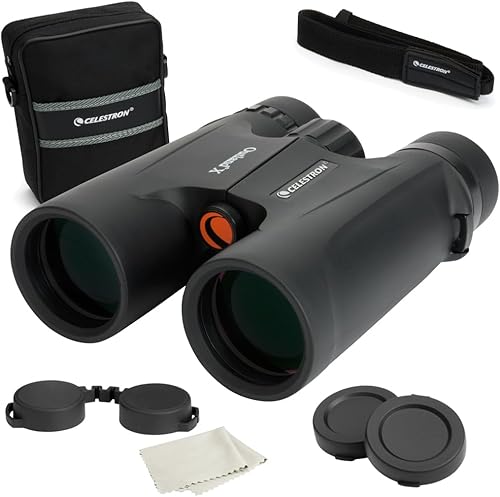
- 8x magnification
- Multi-coated lenses
- BaK-4 prisms
- Waterproof and nitrogen-purged
The Outland X fits casual park walks and mixed nature outings where weather protection and straightforward viewing matter. A case, strap and lens covers are included.
Pros
- Waterproof and nitrogen-purged
- Twist-up eyecups
- Tripod adaptable
Cons
- Tripod adapter is not included
- Lacks the Nature DX's phase-coated prism feature
The Outland X is a straightforward choice for casual nature walks where birds are only part of the outing. It combines multi-coated lenses and BaK-4 prisms with a rubber-armored body and weather protection.
A case, neck strap and lens covers are included, giving you the basic carry and storage items. Use the strap even during a short stop so a loose grip does not turn into a drop.
Its twist-up eyecups let you adjust eye position, and the central focus wheel handles changes in viewing distance. Built-in tripod threads allow mounted use with a separate adapter.
Choose it if you want a conventional outdoor binocular for park paths, scenery and occasional bird identification. Skip it if close garden observation is a major goal, since the Nature DX offers a stated close-focus distance and phase-coated prisms.
Do not mistake the full-size format for a pocket binocular. Decide where it will sit during the walk, especially if you also carry a camera, field guide or daypack.
How we chose binoculars for bird watching
We compared magnification, field of view, eye relief, optical features and carry options against common birding situations. The recommendations reflect those features and their practical trade-offs.
Finding a bird and studying it are different jobs. A broad view helps with the first, while extra magnification can help with the second if your hands stay steady.
We gave fit particular attention because glasses and eyecup position can change how much of the image you see. Included accessories matter too, but a harness cannot make up for an eyepiece that does not suit your eyes.
Use this roundup to narrow your choice by birding style. Our broader binoculars guide for birding, hunting and travel helps if one pair also needs to cover other outdoor activities.
Which binocular features matter most for birding?
Prioritize a steady view, comfortable eye position and easy bird finding before extra features. The right balance depends on your habitat and how long you watch at a time.
Is 8x or 10x better for bird watching?
Start with 8x for mixed birding and choose 10x when distance is a regular problem. Higher power enlarges both the bird and the movement of your hands.
In woods, birds often move between branches at different distances. Lower magnification makes it easier to keep track of the surrounding scene while you follow them.
Across open water, a distant bird may stay in one place long enough for extra magnification to help. Wind, an awkward stance or tired arms can still limit the detail you see.
Read our 8x42 and 10x42 comparison if both sizes suit your usual habitats.
How wide should a birding binocular's field of view be?
Choose more field of view when finding and following birds is your main challenge. It gives you space around the subject and makes small aiming errors less costly.
Compare linear figures measured at the same distance, or compare angular figures with each other. Do not judge width by placing an apparent-angle figure beside a true angular field.
Small differences should not outweigh fit. A view you can see from edge to edge is more useful than a wider one partly blocked by poor eye position.
How much eye relief do glasses wearers need?
You need enough usable eye relief to see the full circle with your usual glasses on. The number helps narrow the choices, but frame shape and how the eyecups meet your face also matter.
Keep prescription glasses on if removing them makes bird finding difficult or leaves vision problems the binoculars cannot correct. Start with the eyecups lowered and adjust from there.
Look for dark crescents, a clipped edge or the need to press your glasses against the eyepieces. Our binoculars for glasses wearers guide covers these signs in more detail.
Do bigger lenses and more coatings guarantee a better view?
Objective size and coatings help explain a binocular's design, but they do not settle the whole choice. All the picks here use the same front-lens diameter, so fit and optical differences deserve more attention.
Fully multi-coated lenses have multiple anti-reflective coatings on all air-to-glass lens surfaces. Prism coatings serve other roles, so a dielectric coating and a phase coating are not interchangeable features.
At dawn or in shade, steady support and correct focus still matter. Extra light cannot rescue a blurred image caused by movement or poor adjustment.
Are waterproof and fogproof binoculars worth it for birding?
Weather protection is worth having for regular outdoor use, even if you rarely plan a walk in rain. Damp vegetation, mist and changing conditions are common parts of birding.
Sealing helps keep water out, while gas purging helps resist internal fogging. Neither prevents condensation from forming on exposed lenses when cold glass meets warm, moist air.
Let that moisture clear rather than rubbing at the lenses repeatedly. Our guide to waterproof and fogproof binoculars explains the limits of these features.
How to choose the right birding binoculars
Choose by your usual habitat first, then check fit and carry comfort. Build the decision around an ordinary outing rather than a rare trip you might take.
For woodland paths and mixed parkland, favor quick bird finding and a steady handheld view. For distant waterbirds, compare stronger magnification with your ability to keep it still.
For garden watching, measure the nearest subject you want to see. Close focus matters more there than a feature meant for long-distance viewing.
Check how the binoculars feel while you reach the focus wheel. Your fingers should turn it without forcing you to loosen your grip or strain your hands.
Think about the whole walk, too. A harness can spread the carrying load, while a strap may suit short outings and a case may work better during travel.
If buying remotely, check the return terms and make fit checks promptly after arrival. Eye spacing, glasses and hand comfort are personal enough that specifications cannot answer every question.
How should you set up binoculars before birding?
Set barrel spacing, eyecups and the diopter before heading out. These adjustments solve different problems, so changing focus alone will not fix every poor view.
Set the hinge and eyecups first
Move the barrels closer together or farther apart until the two circles merge into one round image. Do this while looking at a distant scene rather than staring at the eyepieces.
Start with eyecups raised without glasses and lowered with glasses. Adjust until you see the whole field without black patches appearing as your eyes move.
Balance focus between your eyes
Follow the model's instructions for its diopter adjustment. On a conventional right-diopter design, focus the left eye with the center wheel, then adjust the right eyepiece for the right eye.
Use a fixed subject with clear detail and cover the unused front lens rather than squeezing one eye shut. Once both sides match, use the main focus control as viewing distance changes.
Do not keep turning the diopter to follow birds. Our guide to focusing binoculars explains the sequence and common focus problems.
Practice raising the binoculars to a bird
Find a branch, fence post or perched bird with your eyes, then keep looking at it as you raise the binoculars. Moving your gaze down toward the binoculars first often loses the target.
For steadier viewing, relax your shoulders and tuck your elbows in. Stop walking before looking through the lenses, especially near uneven ground or water.
Which mistakes make bird watching harder?
The biggest mistakes are buying too much magnification, skipping adjustments and searching without a reference point. Each can make a capable binocular feel harder to use than it should.
Do not chase a flying bird by swinging far ahead and back again. Find it with your eyes, bring the binoculars up and follow its direction smoothly.
Avoid judging detail through dirty windows or across rising heat from pavement. Glass reflections and moving air can reduce clarity even when focus is correct.
For identification, note shape, movement and habitat before chasing tiny feather marks. A clear view of the bird's bill or tail may help more than a brief glimpse at greater magnification.
Never point binoculars at the sun. Also give birds room, especially near nests, and change your position if your approach interrupts their behavior.
How should you clean and store birding binoculars?
Remove loose grit before wiping the lenses, and let damp binoculars dry before closing them in a case. These habits protect the glass and keep moisture from lingering around the body.
Use a blower or a suitable soft brush for dust, then follow the brand's directions for lens cleaner and a clean optical cloth. A shirt sleeve can carry grit even when it looks clean.
Keep the cloth protected from dirt and wash or replace it as needed. Exterior protective coatings still need careful cleaning.
Dry the body after wet outings and store the binoculars somewhere dry, away from prolonged heat. Our binocular cleaning guide explains the cleaning order and what to avoid.
Which binoculars should you choose for bird watching?
The best binoculars for bird watching are the pair whose view you can find, focus and hold comfortably. Make the final choice around the limitation you most often face outdoors.
Choose the Triumph if distant detail is that limitation. Pick the Diamondback for broad scanning, or the Nature DX for a mix of garden subjects and general birding.
Start with the Nikon P3 8x42 if glasses restrict your view. Consider the Crossfire for regular trail carry, the P3 10x42 for patient lookout viewing, and the Outland X for casual nature outings.
If you remain split between sizes, choose for your most frequent outing. Our bird watching binocular size guide helps turn that habitat choice into a final decision.
Our top 3 picks at a glance
-
1
-
2
-
3
Frequently asked questions
Are 8x42 binoculars good for bird watching?
Yes, 8x42 binoculars are a useful starting point for most birders because they balance image size with manageable handheld movement. They suit woodland walks, feeders and mixed habitats.
Compare field of view and eye relief within that size, since binoculars with the same numbers can fit your eyes differently.
Are 10x42 binoculars good for bird watching?
Yes, 10x42 binoculars suit distant birds when you can hold the view steady. They make a subject appear larger than an 8x pair, but also enlarge hand movement.
Choose them for open habitats and longer viewing distances, rather than assuming more magnification will help with every bird.
What matters most when choosing birding binoculars?
Prioritize fit, manageable magnification and field of view before extra features. You need to find the bird, hold it in view and focus without strain.
For nearby subjects, check close focus too; for longer walks, consider how you'll carry the binoculars between sightings rather than only while using them.
Do birding binoculars need to be waterproof?
Waterproof construction is worth choosing for regular outdoor birding because rain and damp vegetation are hard to avoid. Fogproof construction helps resist internal fogging, but moisture can still collect on exposed glass.
Neither feature makes binoculars suitable for underwater use; our waterproof and fogproof binoculars guide explains the difference.