How to Focus Binoculars the Right Way
To learn how to focus binoculars, set your eye position, focus the barrel without the diopter using the center wheel, then sharpen the other barrel with the diopter. Use the center wheel for normal viewing afterward.
On this page (9 sections)
- How to focus binoculars step by step
- What does the diopter do?
- How should you set binocular eyecups?
- Why do binoculars still look blurry?
- How do you keep birds and wildlife in focus?
- Which binoculars suit this focusing method?
- What should you check before buying binoculars?
- How do you keep focus controls and lenses ready?
- How to focus binoculars and choose your next pair
To focus binoculars, set your eye position, sharpen the barrel without the diopter using the center wheel, then adjust the other barrel with the diopter. Learning how to focus binoculars in this order helps both eyes see a clear image together.
Use a stationary target with fine detail for the first setup. Once the diopter matches your eyes, you'll normally need only the center wheel as you move between subjects.
How to focus binoculars step by step
For binoculars with a right-eyepiece diopter, focus the left barrel first with the center wheel, then the right barrel with the diopter. Keep the binoculars aimed at the same target throughout.
- Choose a suitable target. Use a sign, fence, or tree trunk far enough away to focus comfortably, with no bright glare behind it.
- Set the eyecups. Start with them lowered if you wear glasses and raised if you don't, then adjust for a full view.
- Set the barrel spacing. Move the hinged barrels together or apart until the separate circles merge into one round image.
- Focus the left barrel. Cover the right front lens without touching its glass, keep both eyes relaxed, and turn the center wheel until fine detail looks sharp.
- Focus the right barrel. Uncover the right lens and cover the left, then turn only the right-eye diopter until the same detail sharpens.
- Check both eyes together. Uncover both lenses and use a small center-wheel adjustment if needed.
Covering a lens usually works better than squeezing one eye shut. Squinting can change how your face meets the eyecups and make the setup harder to repeat.
These steps assume a right-side diopter. For a left-side or central control, follow the model's manual to identify which barrel to focus first and whether the adjustment locks.
Never look at the sun through binoculars, as this can cause permanent eye damage.
How to focus binoculars after the first setup
Use the center wheel with both eyes open whenever your subject changes distance. The diopter should stay at the setting that balances your eyes.
Note its position so you can restore it if someone else uses the binoculars. Repeat the full setup after changing between glasses and no glasses, since the correction your eyes need may change.
What does the diopter do?
The diopter accounts for a difference in focus between your eyes. The center wheel then moves both barrels together as you look closer or farther away.
A common mistake is turning the center wheel to sharpen each eye separately. That changes the first barrel again, so one eye can remain blurry even when the other looks clear.
Set the diopter using the glasses or contact lenses you plan to wear outdoors. If the control locks, secure it after adjustment without forcing it.
Diopter adjustment doesn't correct barrel alignment or make a moving image steady. For help with the separate numbers printed on the body, see what the numbers on binoculars mean.
How should you set binocular eyecups?
Set the eyecups so you see the full field without dark rings or clipped edges. Your eyes need the right distance from the eyepieces before focus adjustments will feel consistent.
With glasses, begin with the eyecups lowered because your lenses already hold your eyes farther back. Without glasses, begin with them raised and try intermediate positions if available.
If dark patches appear as you move, shift the binoculars slightly away from your face. If you see 2 overlapping circles, adjust the barrel spacing rather than the focus wheel.
Eye relief describes the distance behind the eyepiece where the full image remains visible. Our guide to eye relief on binoculars explains why this matters.
Glasses frames and lens thickness affect the fit, so a stated measurement can't settle comfort by itself. Compare the fit priorities in our guide to binoculars for glasses wearers before choosing.
Why do binoculars still look blurry?
First separate blur, shake, and a double image, because each needs a different fix. Repeatedly turning the focus wheel won't solve all 3.
- One eye is sharp and the other isn't: repeat the diopter setup while keeping the center wheel still during the second-eye adjustment.
- The whole image moves: brace your elbows against your body or a firm support, then check a stationary target.
- A nearby subject won't sharpen: step back, since it may be inside the binoculars' minimum focusing distance.
- The view looks hazy: check for smudges, moisture on the outer lenses, or glare from a bright background.
- You see 2 images: reset barrel spacing and eye position; if doubling persists, stop using the binoculars and have their alignment checked.
Let your eyes relax after each small focus adjustment. Rapid turns can carry you past the sharpest point before you recognize it.
Remove loose grit with a blower or soft lens brush before wiping glass. Follow our guide to cleaning binoculars without scratching the lenses for the next steps.
How do you keep birds and wildlife in focus?
Find the subject with your eyes first, then raise the binoculars while keeping your gaze on it. This reduces the time spent searching through a magnified view.
Start with a stationary bird or branch before following moving wildlife. Keep a finger near the center wheel and make small changes as the subject moves closer or farther away.
Focus on the animal rather than a branch in front of it. If nearby leaves keep drawing your eye, shift your position for a clearer gap.
For long viewing sessions, support your arms or use a suitable mount where the binoculars allow it. A steady view makes it easier to judge whether fine detail is actually in focus.
Which binoculars suit this focusing method?
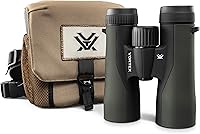
The Vortex Triumph HD 10x42, Nikon PROSTAFF P3 10x42, and Vortex Crossfire HD 10x42 all combine center focus with a diopter adjustment. Choose among them by eye fit, carrying needs, and support options.
These controls serve the same basic purpose across the 3 models. They don't establish that one focus wheel is easier to turn with gloves or faster to adjust.
Vortex Triumph HD 10x42: for hikers who want a carrying harness
Choose the Triumph if you want an included GlassPak harness for carrying binoculars between stops. Adjustable rubber eyecups and 17 mm of eye relief give you useful starting points for finding a comfortable eye position.
Its tripod adaptability also suits longer sessions from a fixed spot. Waterproof and fogproof construction supports outdoor use, though moisture on the outside of a lens still needs attention.
Skip it if your main goal is an easier view to hold steady than 10x. A harness helps carry binoculars, but it doesn't reduce image movement while you're looking through them.
Nikon PROSTAFF P3 10x42: for viewers who need adjustable eye fit
Choose the Nikon if you want turn-and-slide eyecups to fine-tune the space between your eyes and the eyepieces. Its large central focus knob is another feature to consider when comparing control layouts.
The P3 provides 15.7 mm of eye relief and weighs 1.3 lb. Its rubber armor gives you a slip-resistant surface to hold while adjusting focus.
Skip it if you require a confirmed tripod connection, since that feature isn't established here. Glasses wearers should also judge the full visible field with their own frames rather than choosing on the eye-relief figure alone.
Vortex Crossfire HD 10x42: for beginners following the right-eye method
Choose the Crossfire if you want a right-eyepiece diopter that matches the instructions above directly. Twist-up eyecups let you establish eye position before balancing focus.
It supports a tripod or car window mount, which suits wildlife viewing from a fixed position. Its aluminum body weighs 1.4 lb.
Skip it if you need generous clearance for thick glasses: its 15 mm of eye relief leaves less room than the other 2 options here. Also consider a lower-magnification model if keeping the view steady is your main difficulty.
What should you check before buying binoculars?
Prioritize eye fit, reachable controls, and manageable magnification before extra features. A sharp view needs both correct focus and a position you can hold comfortably.
Check whether your index finger reaches the center wheel without loosening your grip. If you wear gloves outdoors, allow enough room to operate the controls with them on.
All 3 models here are 10x42 binoculars. If hand movement makes fine detail hard to follow, our 8x42 vs 10x42 comparison explains the choice.
For close subjects such as butterflies, check the model's minimum focus distance before ordering. Our guide to choosing binoculars by size, glass, and price covers the wider buying decisions.
How do you keep focus controls and lenses ready?
Keep grit out of moving parts and let wet binoculars dry before closing them inside a case. Waterproof construction doesn't remove the need for basic care.
Replace lens covers during transport and keep the binoculars from rubbing against loose items. Avoid turning a stiff control by force or adding oil unless the manufacturer specifically directs it.
After storage, check the diopter position before heading out. A brief look at a familiar distant target can catch an accidental change before you need to follow wildlife.
How to focus binoculars and choose your next pair
If your current binoculars sharpen through each barrel separately, complete the diopter setup before replacing them. If the view still doubles after correcting eye position and spacing, arrange an alignment check.
Choose the Triumph for its included carrying harness, the Nikon for turn-and-slide eye adjustment, or the Crossfire for its clearly placed right-eye diopter and mount support. Use the setup sequence to learn how to focus binoculars, then judge whether the eye fit and steady view suit your needs.
For choices beyond these models, use our binoculars guide for birding, hunting, and travel.
Frequently asked questions
Do you focus binoculars with one eye or both?
Set the diopter with one eye at a time, then use both eyes for normal viewing. Cover the opposite front lens rather than squeezing an eye shut, which can change your viewing position, and leave the diopter alone when you use the center wheel to focus at new distances.
Which way do you turn the binocular focus wheel?
Turn the wheel slowly toward the sharpest view; the direction depends on the binoculars and the target distance. If you pass the clearest point, reverse direction with a smaller movement, then pause to check the detail rather than forcing the wheel against either end of its travel.
Do binoculars need refocusing at different distances?
Most center-focus binoculars need adjustment when you switch between nearby and distant subjects. Use the center wheel with both eyes open, keep your diopter setting unchanged, and step farther away if a close subject stays blurry because it may be inside the binoculars' minimum focusing distance.
Why do binoculars look blurry even after focusing?
Blurry views can come from poor eye position, an incorrect diopter setting, dirty lenses, movement, or a subject that's too close. Repeat the setup on a stationary target with your elbows supported; if you still see a double image, stop using the binoculars and have their alignment checked.