What Is Eye Relief on Binoculars?
Binoculars eye relief is the distance from the eyepiece to where your eye sees the full field. Glasses wearers should start around 15 mm or more, then check the fit with their usual glasses.
On this page (8 sections)
- What does binoculars eye relief change in the view?
- How much eye relief do glasses wearers need?
- How do you set eyecups and focus correctly?
- Which of these binoculars suits your viewing needs?
- What common mistakes cause dark edges or blackouts?
- What should you compare alongside eye relief?
- How do you care for eyecups and eyepieces?
- How should you choose binoculars eye relief?
Binoculars eye relief is the distance from the eyepiece to where your eye sees the full field of view. If you wear glasses, start by comparing models with around 15 mm or more, then check whether you can see the edges with your glasses on.
The right fit gives you one complete circle without pressing against your lenses or hovering awkwardly behind the eyecups. A larger eye relief number gives glasses more room, but eyecup design and frame shape decide how much of that room you can use.
What does binoculars eye relief change in the view?
Eye relief determines where your eyes need to sit, rather than how large or sharp the subject appears. It is measured in millimeters along the viewing line behind each eyepiece.
Too far back, you may see a smaller circle and lose the outer part of the scene. Too close, dark crescents or brief blackouts can appear as your eyes move.
Eye relief differs from field of view, which describes how much of the scene the binoculars show. A wide field helps you follow a moving bird only if your eye position lets you see that width.
It also differs from exit pupil, the small circle of light visible behind an eyepiece. A larger exit pupil can make eye placement more forgiving, but it doesn't replace enough eye relief for glasses.
How much eye relief do glasses wearers need?
Around 15 mm is a starting point, while 17–20 mm is worth seeking if your frames hold your eyes farther from the eyepieces. Neither range guarantees a full view for every face.
The published distance begins at the eyepiece lens, which may sit below the eyecup rim. That recess uses some of the space your glasses need, so two binoculars with the same figure can fit differently.
Frame shape matters too. Thick frames, curved sunglasses, and glasses that sit well forward on your nose can keep your eyes farther back than thin, close-fitting frames.
Check the fit with the glasses you actually use outdoors, including prescription sunglasses. Our guide to binoculars for glasses wearers covers that choice in more detail.
How do you set eyecups and focus correctly?
Set the binoculars' width and eyecups before fine-tuning focus. Focus cannot recover a field of view that your eye position is cutting off.
- Aim at a stationary subject in daylight, away from the sun.
- Move the binoculars' barrels together or apart until the 2 views merge into one circle.
- With glasses on, start with adjustable eyecups retracted; without glasses, start with them extended.
- Move slightly closer or farther away, then adjust the eyecups in small steps until the edges stay visible.
- Set the center focus and diopter according to the binoculars' instructions.
Use the eyecups as gentle supports, without pushing hard against your face or glasses. If one eye loses the edge, check barrel spacing and alignment before changing focus again.
The diopter balances focus between your eyes; it doesn't set viewing distance. Follow our guide on how to focus binoculars if one side stays blurry after the view is centered.
How can you check binocular eye relief fit?
A good fit stays complete through small, natural movements. Hold the binoculars as you would while watching wildlife, rather than keeping them in one strained position.
Look toward the edge of the scene without lifting the binoculars away. If the image disappears with every small movement, adjust eye distance and spacing until you can hold the view more easily.
For shared binoculars, repeat this with and without glasses. Both users need an eyecup position they can find quickly.
Which of these binoculars suits your viewing needs?
Choose by eye fit first, then by how you'll carry and use the binoculars. These 3 models offer different reasons to consider them, but none can guarantee a match for your glasses from a number alone.
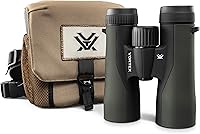
Vortex Triumph HD 10x42: for hikers who want a carry harness
The included GlassPak harness makes the Triumph worth considering for walks where you want binoculars close at hand. Its adjustable rubber eyecups give you a way to set viewing distance, while the diopter adjusts focus balance.
Its fully multi-coated lenses, waterproof construction, and nitrogen purging suit outdoor use in changing weather. The harness and neck strap give you different ways to carry it.
Choose it if you want those carry options and adjustable eyecups for use with or without glasses. Skip it if you already need more clearance than this eye relief provides, or if its eyecup positions leave you struggling to hold the full field.
Bushnell H2O Xtreme 10x42: for boating and wet outings
The IPX7 waterproof construction gives the H2O Xtreme a clear role around water. Its O-ring seals and nitrogen purging address water intrusion and internal fogging, while rubber armor and non-slip grips help with wet handling.
Choose it for boating, fishing, or shoreline wildlife viewing when water protection is a key part of the decision. It also includes a strap, case, and lens covers.
At 709 g, it deserves a carry-weight check before a long walk. Skip it if low weight is your main need, and confirm the eyecup operation before ordering if you need adjustable stops for shared use.
Nikon PROSTAFF P3 10x42: for viewers who value adjustable eye placement
The turn-and-slide eyecups make the PROSTAFF P3 worth considering if you'll alternate between glasses and no glasses. Its center focus wheel handles focus changes, while the eyecups set the distance from your eyes.
Choose it if your frames sit close to your face and you can see the full field with the eyecups retracted. Its multilayer-coated lenses, rubber armor, and waterproof, fogproof construction also suit outdoor viewing.
Skip it if your glasses already need more clearance than the other options offer. Its shorter eye relief makes it the less promising starting point here for bulky frames or eyes that sit well behind the lenses.
What common mistakes cause dark edges or blackouts?
Incorrect distance or alignment often causes dark areas, so adjust position before blaming focus. The pattern can help you decide what to change.
- A small view with hidden edges: Move closer and retract the eyecups if possible.
- Black crescents when you move: Try backing away slightly or extending the eyecups one step.
- Two overlapping circles: Adjust the hinge width until the views merge.
- One clear eye and one blurry eye: Check the diopter after setting the center focus.
Don't remove your glasses just to gain a wider view if doing so leaves the subject blurry. Binocular focus can compensate for some vision differences, but it generally doesn't correct astigmatism.
Avoid choosing the longest eye relief figure without checking eyecup support. Without glasses, eyecups that don't extend far enough can leave you holding the binoculars away from your face to prevent blackouts.
What should you compare alongside eye relief?
Magnification, field of view, and carrying comfort still matter once eye fit is right. Good clearance cannot make a shaky or awkward binocular suit your use.
Higher magnification makes hand movement more visible and can make finding a nearby subject harder. If steady handheld viewing matters more than extra reach, read our 8x42 vs 10x42 comparison before choosing.
The guide to what the numbers on binoculars mean explains magnification and objective lens size. Our broader binocular size guide brings those choices together with carrying needs.
Weather protection is a separate decision from eye relief. For rain, spray, or humid outings, our guide to waterproof and fogproof binoculars explains which protection does what.
How do you care for eyecups and eyepieces?
Keep grit away from eyecups and eyepiece glass so adjustments stay comfortable and lenses stay protected. Use the covers during storage and check the eyecup rims before resting them against glasses.
Remove loose dust before wiping optical surfaces, and use lens-safe cleaning materials. Our guide on how to clean binoculars explains the order that helps avoid dragging grit across the glass.
Don't force a stiff eyecup or add household oil to its mechanism. Follow the brand's care instructions, and keep sunscreen or skin oils from building up on the contact surfaces.
How should you choose binoculars eye relief?
Choose the model that gives you a full, steady field with your usual glasses. If every option clips the edges with the eyecups retracted, look for more usable eye relief rather than accepting a restricted view.
Pick the Triumph for its harness and adjustable rubber eyecups, or the H2O Xtreme when water protection drives the choice. Consider the PROSTAFF P3 when its turn-and-slide eyecups give you a good fit and you don't need the extra clearance of the other 2.
Once binoculars eye relief fits, choose the size and features that suit your outings. Our guide to the best binoculars helps narrow that next decision.
Frequently asked questions
What does eye relief mean on binoculars?
Eye relief is the distance from the eyepiece to where your eye sees the full field of view. Too much distance can hide the edges, while sitting too close can cause blackouts.
Adjustable eyecups help you hold the right position, but they don't change the binocular's optical eye relief.
How much eye relief do I need for glasses?
Around 15 mm or more is a useful starting point, with 17–20 mm worth considering if your glasses hold your eyes farther back. The number alone cannot confirm fit because recessed eyepiece glass and frame shape affect usable distance.
Check for the full field with your usual glasses on.
Should I extend binocular eyecups when wearing glasses?
Usually, start with the eyecups fully retracted when wearing glasses. Bring the binoculars gently toward your lenses and adjust their position until both eyes see one full circle.
If blackouts appear, try slightly more distance or a small eyecup extension instead of pressing the binoculars harder against your glasses.
Is more eye relief always better?
More eye relief helps only if you can hold your eyes at the correct distance. Without glasses, long eye relief can require more eyecup extension to prevent blackouts.
Choose enough room for your glasses, then check that the eyecups also support a steady view for anyone using the binoculars without them.