Vortex vs Nikon Binoculars: Crossfire HD vs PROSTAFF P3 (October 2026)
For Vortex vs Nikon binoculars, choose the Nikon PROSTAFF P3 10x42 for slightly lower weight and longer eye relief. Choose the Vortex Crossfire HD 10x42 for its included GlassPak harness, tripod adaptability and transferable lifetime VIP Warranty.
On this page (14 sections)
- Vortex vs Nikon binoculars: which should you choose?
- Should you buy 10x42 binoculars in the first place?
- How does the field of view compare?
- Which binoculars fit glasses wearers better?
- Which one is easier to carry all day?
- What can you infer about image quality?
- Are both binoculars ready for rain and cold?
- How much should the Vortex warranty affect your choice?
- How do you set up the focus correctly?
- How can you get a steadier view?
- How should you clean and store either pair?
- When is the Vortex Triumph HD worth considering?
- Frequently asked questions
- Your final Vortex vs Nikon binoculars decision
For Vortex vs Nikon binoculars, choose the Nikon PROSTAFF P3 10x42 for slightly lower weight and longer eye relief, or the Vortex Crossfire HD 10x42 for its included harness and warranty coverage. Your carrying habits and viewing comfort should settle this choice before brand loyalty does.
Both main models combine 10x magnification with 42 mm objective lenses, adjustable eyecups and center focus. They suit distant wildlife and outdoor viewing, provided you can hold the image steady.
The useful differences concern fit, accessories and support after damage. Neither brand name alone tells you which binocular will work better for your eyes.

Vortex vs Nikon binoculars: which should you choose?
Choose the Crossfire HD for frequent field use when you want a harness and clearly stated repair coverage. Choose the PROSTAFF P3 for general outings when you prefer a slightly lighter binocular carried on a neck strap or in its case.
The Crossfire makes sense for someone who repeatedly stops to scan during a walk, hunt or wildlife outing. Keeping binoculars ready on a harness can be more useful than saving a small amount of weight.
The Nikon suits birding walks, sightseeing and sports viewing where you already have a carrying routine. Skip it as an automatic upgrade from the Crossfire if your only reason is its modest eye-relief advantage.
These recommendations apply to these models. Our guides to whether Vortex binoculars are good and whether Nikon binoculars are good explain how to think beyond this pair.
Should you buy 10x42 binoculars in the first place?
Buy 10x42 binoculars for detail at a distance if you can keep them steady and accept a full-size pair. Choose a lower magnification if finding nearby birds or controlling hand shake is harder than seeing enough detail.
More magnification also enlarges hand movement. A bird can look larger yet remain difficult to study if the image keeps moving.
For woodland walks, watch how often you need to find a subject quickly among branches. For open ground, consider how much time you spend studying animals that stay in one place.
Both main models have a 4.2 mm exit pupil, the small circle of light you see behind each eyepiece. That shared size doesn't establish equal brightness or low-light performance because the rest of the optical system also matters.
Read our 8x42 vs 10x42 comparison before choosing either model if you're unsure about magnification.
How does the field of view compare?
The Nikon provides a clear reference of 367 ft at 1,000 yd; the Crossfire’s 325 ft figure needs its reference distance confirmed. Don't rank the views by those numbers alone.
A wider field helps you locate a subject and keep moving wildlife in sight. It doesn't increase magnification or guarantee that fine detail will look clearer.
For birding, finding the bird often matters more than enlarging it further. Raise the binoculars while keeping your eyes on the bird rather than looking down at the binoculars first.
How should you compare Vortex vs Nikon binocular field of view?
Compare matching units at the same distance, then check whether you can comfortably see the image edges. A view that looks broad on paper is less useful if your glasses or eyecup position hide part of it.
Avoid comparing apparent-angle figures with field widths in feet. They describe the view in different ways and shouldn't be treated as interchangeable numbers.
Which binoculars fit glasses wearers better?
Start with the Nikon for its small eye-relief advantage, but buy according to the full view you can actually see. Eye relief measures how far your eye can sit behind the eyepiece while retaining the intended view.
The PROSTAFF P3 offers 15.7 mm, compared with 15 mm for the Crossfire HD. A difference of 0.7 mm is too small to make the decision without considering your glasses and facial shape.
Nikon uses turn-and-slide eyecups; the Crossfire’s eyecups twist up and down. Begin with the cups lowered when wearing glasses, then adjust until the view is clear and stable.
Without glasses, start with the eyecups extended. If dark crescents appear, make small changes to cup height and eye position rather than pushing harder against your face.
Our guide to what binocular eye relief means explains fit in more detail. Choose a useful return option if you can't check the binoculars with your normal glasses before buying.
Which one is easier to carry all day?
The Nikon is slightly lighter, but the Crossfire includes a different carrying setup. Compare the whole arrangement you'll wear, including straps, case and any other gear.
The Nikon weighs 1.3 lb, while the Crossfire weighs 1.4 lb. That 0.1 lb gap is small enough that strap fit and access may matter more during a long outing.
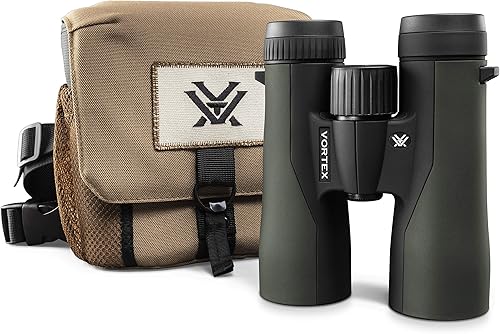
The Crossfire includes a GlassPak harness, a neck strap, lens covers and a cloth. Nikon includes a neoprene neck strap, case and eyepiece and objective caps.
A well-adjusted harness can keep binoculars close to your chest and reduce swinging as you walk. Set it high enough for easy access without letting it interfere with backpack straps.
Skip both as your first choice if you want binoculars that disappear into a small jacket pocket. A full-size pair is worth carrying only if you'll bring it along and keep it accessible.
What can you infer about image quality?
Use the coating and glass details to understand construction, not to declare an optical winner. These facts don't establish which model gives better contrast, edge detail or color control in the same scene.
The Crossfire has fully multi-coated lenses. Nikon uses multilayer-coated lenses and a silver-alloy prism coating.
Vortex describes its HD optical system as designed to reduce color fringing and improve sharpness. Nikon describes its coatings as reducing reflections and improving brightness and contrast.
Those descriptions support each model’s intended role, but they aren't a direct comparison. Don't choose solely because one name includes “HD” or because one description uses stronger adjectives.
If you can compare the binoculars before committing, look at shaded detail, bright edges and the outer part of the view. Pay attention to eye strain and ease of finding the image as well as sharpness.
Are both binoculars ready for rain and cold?
Both main models have waterproof and fogproof construction using O-ring seals and nitrogen purging. These features make sense for outdoor trips where weather can change before you return indoors.
Nikon specifies waterproofing down to 3.3 ft and says the PROSTAFF P3 isn't intended for underwater use. Treat both as viewing tools to protect, rather than gear to immerse on purpose.
Fogproof construction addresses moisture inside the binoculars. Rain, breath and condensation can still obscure the outer lenses.
In cold weather, avoid breathing directly onto the eyepieces. When moving into a warm room, allow the binoculars to adjust before wiping away moisture or putting them into long-term storage.
Our guide to waterproof and fogproof binoculars explains why weather protection and careful handling belong together.
How much should the Vortex warranty affect your choice?
Give the Vortex warranty real weight if you expect frequent outdoor use and want clear terms for damage or defects. It should support a binocular that fits you, rather than persuade you to accept an uncomfortable view.
Vortex backs both models here with its transferable lifetime VIP Warranty, promising repair or replacement for damage or defects. It excludes loss, theft, deliberate damage and cosmetic damage that doesn't affect performance.
That coverage can matter on repeated field trips, but it won't replace a pair left behind at a trailhead. Secure the strap and keep track of the binoculars during stops.
Compare Nikon’s current terms for your country before deciding which warranty suits you better. Don't infer Nikon’s coverage from the Vortex promise.
How do you set up the focus correctly?
Set the barrel spacing, eyecups and diopter before normal focusing. Skipping these steps can make a suitable binocular seem difficult to use.
Start with a stationary subject in good light. Move the barrels together or apart until you see one circular image, then adjust the eyecups for your glasses or bare eyes.
On the Crossfire, the diopter is on the right eyepiece. Cover the right objective without pressing on the glass, and use the center wheel to focus the left-eye view.
Next, cover the left objective and adjust the right diopter until the same subject is sharp. Open both eyes and use the center wheel for changes in distance.
Follow Nikon’s instructions for its diopter setup, using the same principle of matching the two eyes. Reset the adjustment when sharing binoculars with someone whose vision differs.
Our guide on how to focus binoculars the right way gives the full sequence.
How can you get a steadier view?
Use body support before seeking more magnification. Stand with your feet comfortably apart, tuck your elbows toward your ribs and hold the binoculars without a tight, tiring grip.
For seated viewing, support your elbows on your knees or a stable surface. Stop walking before looking, especially near slopes, water or uneven ground.
The Crossfire is tripod adaptable, making it an option for longer sessions from a fixed position. Its compatibility also includes a car window mount.
Check the adapter and mount requirements before planning that setup. Tripod adaptability doesn't mean a tripod or adapter comes in the box.
For brief bird sightings, quick access usually matters more than setting up support. For a distant animal that stays put, support can make prolonged observation easier.
How should you clean and store either pair?
Remove loose grit before wiping the glass, and store the binoculars dry. Rubbing dust with a cloth can drag particles across the lens surface.
Use a blower or a clean lens brush first, then follow the brand’s directions for lens-safe cleaner and cloth use. Keep the cloth away from sand, dirty pockets and other sources of grit.
Don't use a shirt sleeve just because it's nearby. Rubber armor protects the body and helps grip, but it doesn't protect exposed glass from poor cleaning habits.
After a wet outing, dry the exterior and let straps and the case dry before packing everything away. Replace the caps once the lenses are clean and dry.
Our guide to cleaning binoculars without scratching the lenses covers the process. Never point binoculars at the sun because magnified sunlight can cause severe eye injury.
When is the Vortex Triumph HD worth considering?
Consider the Triumph HD for lower carried weight and more eye relief if those needs lead your shortlist. It offers 17 mm of eye relief and weighs 0.45 kg, about 0.99 lb, making it lighter than both main models.
It has a polycarbonate chassis with rubber armor, a GlassPak harness, adjustable eyecups and tripod adaptability. Vortex also gives it waterproof and fogproof construction and the same VIP Warranty described above.
Confirm its magnification and field of view before buying because the supplied figures conflict. Skip it as a firm choice for tracking wildlife until those details are clear.
For more on the main Vortex option, read our Crossfire HD 10x42 review. The separate Nikon PROSTAFF P3 8x42 review covers a different magnification, so don't transfer its viewing specifications to the Nikon here.
Frequently asked questions
Choose between these models by fit, carrying method and intended use. The answers below address the remaining buying questions.
Is Vortex or Nikon better for binoculars?
Neither brand wins every use. Choose the Crossfire HD when its harness, mounting option and warranty suit frequent field trips.
Choose the PROSTAFF P3 when you prefer its slightly lower weight and modest eye-relief advantage. A comfortable fit matters more than choosing a brand in advance.
Which has the wider field of view, Crossfire HD or PROSTAFF P3?
Confirm the Crossfire’s reference distance before ranking them. Field widths only support a fair comparison when measured at the same distance.
If following birds is your priority, also check that you can find the image quickly and see its edges. Eyecup fit can affect how much of the view you use.
Are both binoculars waterproof and fogproof?
Yes, both main models have these protections. They suit outdoor weather, but external glass can still collect rain or condensation.
Dry the binoculars before storage and follow the brand’s care instructions. Don't treat weather sealing as permission to leave them wet in a closed case or deliberately submerge them.
Which is better for glasses wearers?
Start with Nikon, then check the fit. Its eye-relief advantage over the Crossfire is small, so your glasses can still decide the result.
You should see the full image without pressing the eyecups against your lenses. The Triumph offers more eye relief than either main model if you need another option.
What is the difference between the Crossfire HD and Triumph HD?
The Triumph is lighter and has more eye relief. Both include a harness and offer mounting support, weather protection and Vortex’s warranty.
The Crossfire has an aluminum enclosure, while the Triumph uses a polycarbonate chassis. Resolve the Triumph’s conflicting viewing specifications before choosing it for a task that depends on them.
Your final Vortex vs Nikon binoculars decision
Choose the Crossfire HD if you'll use the harness regularly, want a mounting option and value Vortex’s stated repair coverage. Choose the PROSTAFF P3 if its fit works better for you and you prefer a slightly lighter pair for general outings.
Pause the purchase if neither gives you a comfortable full view or if 10x feels too shaky. Those problems will matter every time you raise the binoculars.
Use this Vortex vs Nikon binoculars comparison to narrow the choice, then work through our binoculars guide for birding, hunting and travel if your main activity points toward a different size.
Frequently asked questions
Is Vortex or Nikon better for binoculars?
Choose by model and use rather than brand alone. The Crossfire HD suits frequent outdoor trips when its harness, tripod adaptability and Vortex warranty matter most.
The PROSTAFF P3 suits buyers who prefer slightly lower weight and a little more eye relief; neither choice establishes a winner across both brands.
Which has the wider field of view, Vortex Crossfire HD or Nikon PROSTAFF P3?
A firm comparison needs both measurements at the same distance. The PROSTAFF P3 covers 367 ft at 1,000 yd, while the Crossfire HD’s 325 ft figure lacks a reference distance here.
Confirm that distance before ranking them, especially if following moving birds is your main use.
Are both binoculars waterproof and fogproof?
Yes, both main models have waterproof and fogproof construction using O-ring seals and nitrogen purging. Those features suit changing outdoor weather, but they don't prevent rain or condensation on the outer lenses.
Dry the binoculars before storage and follow the brand’s instructions for exposure and cleaning.
Which is better for glasses wearers?
Start with the PROSTAFF P3 for its modest eye-relief advantage over the Crossfire HD, then judge the actual fit. You should see the full image with your normal glasses and without pressing the eyecups into them.
The Triumph HD offers more eye relief than either main model.
What is the difference between the Vortex Crossfire HD and Triumph HD?
The Triumph HD is lighter and offers more eye relief, while the Crossfire HD has an aluminum enclosure rather than the Triumph’s polycarbonate chassis. Both offer a GlassPak harness, tripod adaptability and Vortex’s lifetime VIP Warranty.
Confirm the Triumph’s conflicting magnification and field-of-view specifications before choosing it for a specific task.