Vortex Crossfire HD 10x42 Review: Worth It? (October 2026)
The Vortex Crossfire HD 10x42 is a good fit for distant wildlife and open-country viewing if you can hold a 10x binocular steady. Choose an alternative for easier scanning or more room between your glasses and the eyepieces.
On this page (10 sections)
- What does the Vortex Crossfire HD 10x42 offer?
- Who should buy it, and who should skip it?
- How useful is the view for birds and distant wildlife?
- Which alternative suits your way of viewing?
- Is the eye relief enough if you wear glasses?
- How should you set up the focus and diopter?
- How can you get a steadier view?
- How should you protect it from rain, fog and dirt?
- What buying mistakes should you avoid?
- Should you choose the Vortex Crossfire HD 10x42?
The Vortex Crossfire HD 10x42 is a good choice for distant wildlife in open spaces, especially when you can brace your arms or watch from a fixed spot. Choose it for deliberate viewing across fields, shorelines and hillsides rather than the easiest way to follow nearby birds.
Its main buying trade-off is simple: extra magnification helps with distant detail, but a wider, steadier view can be more useful when subjects move. Your glasses, grip and usual viewing distance should decide which matters most.
What does the Vortex Crossfire HD 10x42 offer?
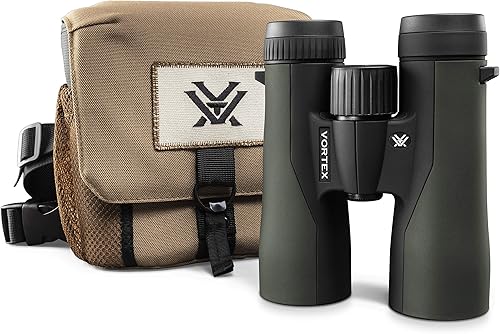
The Crossfire HD combines full-size optics and outdoor protection with a carry system that keeps it within reach. It fits buyers who want one binocular for wildlife watching, hunting and stops along a hiking route.
Vortex Crossfire HD 10x42: Best for open-country viewing
- 10x magnification
- 42 mm objective lenses
- Waterproof and fogproof
- Tripod adaptable
A practical choice for watching distant wildlife from a steady position. Its rubber armor, weather protection and included GlassPak case and harness suit regular outdoor carry.
Pros
- Twist-up eyecups adjust for viewing with or without glasses
- Right-eyepiece diopter balances focus between your eyes
- GlassPak case and harness included
- Accepts a tripod or car-window mount
Cons
- Eye relief can limit the view for some glasses wearers
- Narrower field than the Nikon PROSTAFF P3 10x42
- Hand movement is more visible than at 8x
Its roof-prism design houses 42 mm objective lenses and fully multi-coated optics. Vortex says its selected glass elements help reduce color fringing and support resolution, color fidelity and sharpness across the view.
Those coatings reduce reflections at glass surfaces, helping more light pass through the binocular. For you, the useful distinction is between seeing a subject larger and being able to make out its detail without shake or poor focus getting in the way.
Rubber armor adds grip and external protection, while the aluminum enclosure gives the binocular a weight of 1.4 lb. That is worth handling before committing to long walks with it around your neck.
The package includes a GlassPak case and harness, eyepiece cover, tethered objective covers, neck strap and lens cloth. Adjust the harness so the binocular stays close to your chest without making it awkward to lift.
Who should buy it, and who should skip it?
Buy it if most of your viewing happens at a distance and you can pause to get steady. Skip it if finding and following nearby movement matters more than making faraway subjects appear larger.
A bird perched across a pond or an animal standing on a distant slope gives you time to locate, focus and study it. These situations favor the Crossfire's magnification more than a small bird hopping through close branches.
For hiking, think about how you actually use binoculars. If you stop at overlooks, a full-size pair makes sense; if you want brief looks while moving along a trail, ease of aiming may matter more.
Glasses wearers should make eye placement an early check. The guide to binocular eye relief explains why the distance between your eyes and the eyepieces can affect how much of the image you see.
Don't choose this model just because 10 sounds better than 8. A smaller image that stays steady and centered can reveal more useful detail than a larger image that keeps slipping out of view.
How useful is the view for birds and distant wildlife?
The Crossfire favors studying a located subject over searching a broad scene. Its 325 ft field of view gives less surrounding space than the alternatives discussed below.
That matters most when movement is quick or unpredictable. A bird can leave a narrow view before you have time to refocus, forcing you to lower the binocular and find it again.
For easier aiming, locate the subject with your eyes first. Keep looking at that spot as you raise the binocular, rather than looking down at the eyepieces and losing your reference.
Magnification also enlarges hand movement. Brace your elbows against your ribs, lean against a stable support or sit down when studying a distant subject for more than a quick look.
The 8x42 vs 10x42 binoculars guide explains this trade-off in more detail. Choose around your hardest routine task, such as following birds in trees or reading distant wildlife detail across open ground.
At dawn and dusk, a steady hold and careful focus become especially useful. Larger-looking subjects don't automatically look clearer as light fades, and coatings cannot replace the light that is no longer available.
Which alternative suits your way of viewing?
Choose an alternative for a specific improvement in fit or use: more eye relief, a wider scene or easier handheld viewing. Shared terms such as HD and weather protection don't settle those choices.
Vortex Crossfire HD 10x42: for deliberate distance viewing
Keep the Crossfire on your shortlist if distant subjects are your main goal and its eyepieces fit you comfortably. Tripod adaptability adds a useful option for long watches from a fixed position.
Skip it if you already struggle to hold a 10x binocular steady. Moving to this model without changing your support or technique won't remove that basic magnification trade-off.
If you're weighing another model in the same brand, the Crossfire HD vs Diamondback HD comparison is the next useful read.
Vortex Triumph HD 10x42: for buyers prioritizing glasses fit
Start with the Triumph if you want to keep the same magnification but need more space behind the eyepieces. Its 17 mm eye relief is the longest among these options, though frame shape still affects the result.
It also includes an adjustable GlassPak harness, so the harness alone isn't a reason to choose the Crossfire over it. The Vortex Crossfire HD vs Triumph HD 10x42 comparison helps narrow that choice.
Skip the Triumph as a solution to shaky viewing, since it keeps the same magnification. Read the separate Vortex Triumph HD 10x42 review if eye placement is your main concern.
Nikon PROSTAFF P3 10x42: for keeping moving subjects in sight
Choose the Nikon if you want distant subjects enlarged while retaining more surrounding scenery. Its 367 ft field of view at 1,000 yards gives moving wildlife more room before it leaves the frame.
It has multilayer-coated lenses, a silver-alloy prism coating and adjustable turn-and-slide eyecups. Its eye relief is 15.7 mm, so glasses wearers shouldn't assume it will solve a fit problem by itself.
Skip it if your main difficulty is hand shake rather than losing subjects at the edge. The Vortex and Nikon comparison looks more closely at choosing between these brands.
Vortex Crossfire HD 8x42: for scanning trees and nearby activity
Choose the 8x42 for easier handheld scanning, especially around woodland edges and feeding birds. Its 390 ft field of view gives you more room to locate subjects, while lower magnification makes shake less distracting.
The trade-off is a smaller image of distant animals. Skip it if you mainly watch faraway subjects from a supported position and want the extra magnification.
Its 14 mm eye relief also makes glasses fit a concern. Don't assume lower magnification means more comfortable eye placement.
Is the eye relief enough if you wear glasses?
The Crossfire's 15 mm eye relief needs a personal fit check if you keep your glasses on while viewing. You should see the full circular image without pushing the eyepieces hard against your frames.
Start with the eyecups lowered, then adjust the hinge spacing until both barrels form one circle. If you still see clipped edges, your glasses may be holding your eyes too far away.
Black crescents or sudden dark patches can also come from holding your eyes too close or off center. Move the binocular slightly and adjust the eyecups before blaming the optics.
Use your normal viewing glasses for this check. The guide to choosing binoculars for glasses wearers covers the fit details that a single eye-relief number cannot settle.
How should you set up the focus and diopter?
Set barrel spacing, eyecups and diopter before deciding whether the image is sharp. The center wheel handles routine focusing, while the right-eyepiece diopter balances differences between your eyes.
- Adjust the hinge until you see one round image, without a doubled center or dark overlap.
- Set the eyecups for a comfortable viewing distance, starting lower with glasses and higher without them.
- Set the diopter to zero and choose a distant, still object with clear detail.
- Cover the right objective without touching the glass, then focus the left barrel with the center wheel.
- Cover the left objective, uncover the right one and adjust only the right diopter until the same detail looks sharp.
- Uncover both sides and use the center wheel as you move between viewing distances.
Keep both eyes open while covering each objective if that feels comfortable. Squinting can make it harder to judge a relaxed, clear image.
Remember the diopter position once you find it, particularly if someone else uses the binocular. The full guide to focusing binoculars explains how to correct common setup problems.
How can you get a steadier view?
Use body support before adding accessories. A relaxed grip, supported elbows and a stable stance often make distant detail easier to study.
Hold both barrels rather than gripping only one side. Avoid squeezing so hard that your arms tense up, and take breaks during long watches.
The Crossfire accepts a tripod or car-window mount for supported viewing. Check the adapter and mount fit before buying accessories, and choose support that keeps the binocular at a comfortable eye height.
Never use binoculars while driving or walking over uneven ground. Stop first, find stable footing and then raise them to your eyes.
How should you protect it from rain, fog and dirt?
Use the weather protection for ordinary outdoor exposure, then dry and clean the binocular before storage. O-ring seals and nitrogen purging protect against water intrusion and internal fogging.
They don't prevent raindrops or condensation from covering the outer lenses. Keep the covers on between viewing stops, especially around mud, blowing sand or salt spray.
After wet use, wipe the exterior and let it dry before closing the case. Avoid leaving damp binoculars sealed away for long periods.
For lens care, remove loose grit with a blower or soft lens brush before wiping. Use suitable lens cleaner and a clean lens cloth for remaining marks, following the care directions.
A shirt sleeve can drag dust across the glass, even when it looks soft. The binocular cleaning guide walks through a safer cleaning order.
Read whether waterproof and fogproof binoculars are worth it if changing temperatures and wet weather are part of your routine. Weather protection helps, but careful storage still matters.
What buying mistakes should you avoid?
Avoid choosing by magnification alone, paying twice for accessories you already get or treating a warranty as damage prevention. Each can distract from the fit you need.
Check the included carry gear before buying another case or harness. Spend time adjusting it first, since poor strap fit can make a reasonable carry weight feel awkward.
Don't assume an HD label proves one binocular has better optics than another. Prioritize the viewing task, eye placement and ability to hold the image steady.
Vortex backs these models with its transferable lifetime VIP Warranty for repair or replacement of damaged or defective items. It excludes loss, theft, deliberate damage and cosmetic damage that doesn't hinder performance.
That makes secure carry worth taking seriously. Close the case when packing, check strap connections and avoid leaving the binocular loose on a sloping surface.
For help choosing across uses, start with the binoculars guide for birding, hunting and travel. If birds are your main subject, use the bird-watching binocular selection guide to match your choice to habitat and movement.
Should you choose the Vortex Crossfire HD 10x42?
Choose the Vortex Crossfire HD 10x42 for supported distance viewing and regular outdoor carry, provided the eyepieces give you a full, comfortable view. Make that fit check before letting accessories or brand preference decide.
Choose the Triumph for more eye relief, the Nikon for a wider scene at the same magnification, or the Crossfire 8x42 for easier scanning and steadier handheld use.
If you're still unsure, decide which causes more trouble: subjects looking too small or subjects being hard to find and hold in view. The 8x42 vs 10x42 guide will help turn that answer into the right size choice.
Frequently asked questions
Is the Vortex Crossfire HD 10x42 waterproof?
Yes. O-ring seals and nitrogen purging provide water and fog protection for outdoor use.
Keep the lens covers on when you aren't viewing, and dry the exterior before putting it away.
Internal fog protection doesn't stop rain, fingerprints or condensation from covering the outside surfaces of the lenses.
Is the Vortex Crossfire HD 10x42 good for glasses?
It can work with glasses, but its 15 mm eye relief makes fit a key buying check. Lower the eyecups and look for the full circular view without pressing your frames into them.
If the edges stay clipped, consider the Triumph HD, which offers more eye relief.
What is the field of view on the Crossfire HD 10x42?
The Crossfire HD 10x42 has a 325 ft field of view. That makes it better suited to deliberate viewing than buyers who prioritize broad scanning.
The Nikon PROSTAFF P3 10x42 offers a wider view at the same magnification, while the Crossfire HD 8x42 combines a wider view with lower magnification.
Should I choose the Crossfire HD 10x42 or 8x42?
Choose the 10x42 for distant subjects when you can brace your arms or use support. Choose the 8x42 for nearby birds, broad scanning or easier handheld viewing.
If you struggle to keep a subject centered, lower magnification is usually more useful than making the subject look larger.