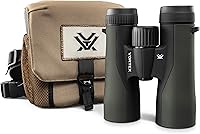
Vortex Triumph HD 10x42 Review: Worth It? (October 2026)
The Vortex Triumph HD 10x42 is a practical choice for hikers and hunters who want an included harness and weather protection. Choose it for distant subjects, provided you can hold a 10x view steady and get a full view with your glasses.
On this page (10 sections)
- The Vortex Triumph HD 10x42 at a glance
- What can you expect from the Triumph HD's optics?
- Will the Triumph HD fit glasses wearers?
- How useful is the included carry kit?
- How does the Triumph HD handle rain and rough use?
- Which alternative should you choose over the Triumph HD?
- How do you set up the Triumph HD correctly?
- Which viewing mistakes should you avoid?
- How should you clean and store the Triumph HD?
- Should you buy the Vortex Triumph HD 10x42?
The Vortex Triumph HD 10x42 is a practical choice for hikers and hunters who want an included harness and weather protection. It suits distant wildlife and regular outdoor stops, provided a 10x view feels steady in your hands.
Its appeal is the complete carry setup and adjustable fit. Your decision should turn on how you watch wildlife, how the eyepieces work with your eyes, and whether you need support for longer viewing.
The Vortex Triumph HD 10x42 at a glance
The Triumph HD makes sense as a full-size outdoor binocular with a carry kit included. Choose it for trail stops, open-country viewing and general wildlife watching rather than pocket-size packing.
Vortex Triumph HD 10x42: Best for hiking and hunting

- 10x magnification
- 42 mm objective lenses
- 17 mm eye relief
- GlassPak harness included
A full-size binocular for frequent stops along a trail or hunting route, with an adjustable GlassPak harness and weather protection.
Pros
- Adjustable GlassPak harness and neck strap included
- 17 mm eye relief
- Nitrogen purged and waterproof
- Tripod adaptable
Cons
- 10x makes hand movement more visible
- Full-size body takes more pack space than pocket binoculars
The main reason to consider it is convenience: you can choose between a harness and a neck strap without building a carry kit separately. Adjustable eyecups and a diopter let you set the view for your eyes.
Who should buy the Vortex Triumph HD 10x42?
Buy it if you spend more time looking at distant subjects from a stop than following close wildlife while moving. A bird across a pond or a deer near a far tree line is a better match than a bird darting through nearby branches.
Skip this size if you want binoculars that disappear into a jacket pocket. Also reconsider it if your hands shake during sustained viewing and you don't want to brace your elbows or use a support.
The 8x42 vs 10x42 binoculars guide explains why lower magnification can be easier to hold and aim. Choose the magnification that gives you a usable view, rather than assuming more power always reveals more detail.
What can you expect from the Triumph HD's optics?
Expect 10x magnification, 42 mm objective lenses and fully multi-coated optics for general outdoor viewing. These features suit distant subjects, but they don't establish an optical winner over every alternative.
Vortex says its HD optical system uses optimized glass elements to improve resolution, color fidelity and light transmission while reducing chromatic aberration. Color fringing is most noticeable around high-contrast edges, such as a dark branch against a bright sky.
Good focus and steady handling matter as much as choosing the right size. A magnified image that keeps moving can hide the small markings you're trying to see.
For fading light, use a stable position and allow your eyes time to adjust. Don't assume an “HD” label means you can identify wildlife clearly after useful daylight has gone.
Does the Triumph HD have a wide field of view?
A reliable Triumph field-of-view figure isn't established here, so confirm it with Vortex if scan width will decide your choice. This matters most when you're trying to locate moving wildlife quickly.
Field of view describes how much of the scene you see at once. Compare angular measurements with angular measurements, or linear widths measured at the same distance.
Don't confuse magnification with scan width: two binoculars with the same power can show different amounts of the surrounding scene. Our guide to binocular numbers explains the size labels before you compare models.
Will the Triumph HD fit glasses wearers?
The Triumph's 17 mm eye relief makes it worth considering with glasses, but your frames and viewing position decide the fit. You should see the full circular image without pressing the binoculars into your glasses.
Start with the eyecups lowered when wearing glasses. Without glasses, raise them as needed to keep your eyes at a comfortable distance from the eyepieces.
Move the binoculars slightly toward and away from your face while looking at a stationary subject. Black crescents or disappearing edges can mean your eye position or barrel spacing needs adjustment.
A larger eye-relief number is useful, but it isn't a promise of comfort for every face. Read what eye relief means on binoculars if you can't see the image edges clearly.
How useful is the included carry kit?
The included adjustable GlassPak harness is useful when you want the binoculars close at hand between frequent viewing stops. The kit also includes a neck strap, tethered objective covers, eyepiece covers and a lens cloth.
Use the harness for walks where a hanging binocular would swing against your body. Set its height so you can raise the binoculars easily without leaving them loose enough to bounce.
A neck strap is simpler for short outings or watching from one place. Adjust it before walking, and check that all strap connections are secure.
The Triumph is tripod adaptable, which helps during longer sessions aimed at one area. Plan for a compatible adapter and support rather than assuming the binoculars attach directly to any tripod head.
How does the Triumph HD handle rain and rough use?
Vortex describes the Triumph HD as waterproof, fogproof and shockproof, with nitrogen purging and full rubber armor over a polycarbonate chassis. Those features suit outdoor use, while careful storage protects it between outings.
Rubber armor helps with grip and external protection. It doesn't make dropping binoculars a sound way to judge durability, so keep the strap or harness secured near rocks, water and steep ground.
Internal fog protection also differs from moisture on the outside of a lens. Rain or condensation on exposed glass can still block the view until the surface clears.
Vortex backs it with an unlimited, unconditional, lifetime VIP Warranty that is fully transferable and covers repair or replacement for damage or defects. It excludes loss, theft, deliberate damage and cosmetic damage that doesn't hinder performance.
Our guide to waterproof and fogproof binoculars explains when those protections matter most.
Which alternative should you choose over the Triumph HD?
Choose an alternative when it solves a specific fit, mounting or weather need better for you. The Crossfire HD, Nikon PROSTAFF P3 and Bushnell H2O Xtreme each offer a reason to compare beyond brand preference.
| Model | Main reason to consider it | Main reason to skip it |
|---|---|---|
| Vortex Triumph HD 10x42 | Included adjustable harness for regular outdoor carry | You need pocket-size packing or easier handheld magnification |
| Vortex Crossfire HD 10x42 | Tripod and car-window mounting options | Its shorter eye relief prevents a full view with your glasses |
| Nikon PROSTAFF P3 10x42 | A clearly specified field of view for wildlife scanning | You want a harness included |
| Bushnell H2O Xtreme 10x42 | An explicit IPX7 waterproof rating | Carry weight matters more than that rating |
Triumph HD or Crossfire HD?
Choose the Crossfire HD if supported observation is central to your plans and its eyepieces fit you well. It supports a tripod or car-window mount, making it worth considering for long stops overlooking a field.
It has 15 mm eye relief, compared with the Triumph's longer measurement. Glasses wearers should settle that fit question before treating the Crossfire as an upgrade.
Both Vortex models include a GlassPak harness, fully multi-coated lenses and weather protection. Those shared features don't give you a reason to replace a suitable Triumph with a Crossfire.
Skip the Crossfire if you can't identify a feature you need beyond what the Triumph provides. Our Crossfire HD vs Triumph HD comparison helps narrow that choice.
Triumph HD or Nikon PROSTAFF P3?
Choose the Nikon PROSTAFF P3 if a specified scan width matters to your wildlife watching. Its field of view is 367 ft at 1,000 yd, giving you a clear measurement to compare with other binoculars.
That figure doesn't establish that the Nikon is wider than the Triumph. It does let you judge the Nikon against models with measurements taken at the same distance.
The P3 has turn-and-slide eyecups, 15.7 mm eye relief, multilayer-coated lenses and a silver-alloy prism coating. Its case and neck strap suit buyers who prefer a simple carry setup.
Skip it if an included harness is high on your list, or if its eyepiece fit clips the view with your glasses. Coating names shouldn't outweigh comfort during the way you actually watch.
Triumph HD or Bushnell H2O Xtreme?
Choose the Bushnell H2O Xtreme if accidental immersion is a concern during boating or shoreline outings. Its IPX7 waterproof rating gives you a specific protection standard to weigh.
It pairs fully multi-coated glass with BaK-4 prisms, rubber armor and non-slip grips. A case, strap and lens covers are included.
At 709 g, carry weight deserves attention if you're walking all day with other gear. Skip it if you mainly need binoculars for dry trails and would get more use from the Triumph's included harness.
How do you set up the Triumph HD correctly?
Set the barrel spacing, eyecups and diopter before relying on the center focus wheel. A poor initial setup can leave one eye blurred or make the image uncomfortable even when the subject appears in focus.
- Choose a stationary subject with clear detail in good daylight.
- Move the barrels together or apart until you see one circular image.
- Adjust the eyecups for your glasses and eye position.
- Follow Vortex's instructions to set the diopter for the difference between your eyes.
- Use the center wheel to refocus as subject distance changes.
Once the diopter is set for you, leave it alone during normal focusing. Reset it when another person uses the binoculars or when it has moved by accident.
Practice finding a subject without looking down at the binoculars first. Keep your eyes on the bird or landmark, then raise the eyepieces into your line of sight.
For the full sequence, follow our guide to focusing binoculars correctly.
Which viewing mistakes should you avoid?
Avoid unsupported viewing, constant refocusing and walking while looking through the eyepieces. These habits make a distant subject harder to study and can create avoidable risks outdoors.
For a steadier view, tuck your elbows toward your body or rest them on a firm surface. If the image keeps moving, steady your position before turning the focus wheel again.
Scan with your unaided eyes first, then raise the binoculars once you've found movement. Sweeping back and forth through a magnified view makes it easier to lose your place.
Stop walking before viewing, especially near uneven ground or water. Never look at the sun through binoculars, even briefly.
How should you clean and store the Triumph HD?
Remove loose dust and grit before wiping the lenses, then use clean optical-cleaning materials. Rubbing a dirty lens with a shirt or dusty cloth can drag particles across the surface.
Keep the supplied cloth clean and separate from gritty pockets. Use lens-safe cleaner according to its instructions when a dry cloth won't remove a mark.
After rain, dry the exterior and let damp carry gear air out before storage. Covers help protect the glass, but closing wet equipment inside a case traps moisture.
Our guide to cleaning binoculars without scratching the lenses gives the step-by-step method.
Should you buy the Vortex Triumph HD 10x42?
Buy the Vortex Triumph HD 10x42 if outdoor carry, distant viewing and an included harness match your routine. Before committing, settle the 2 questions that matter most: can you hold the view steady, and can you see the full image comfortably?
Choose Crossfire for its supported-viewing options, Nikon for a measurable scanning comparison, or Bushnell when its waterproof rating addresses your outings. If close, fast-moving birds are your main subject, reconsider magnification before choosing among these models.
For broader options, use our binoculars guide for birding, hunting and travel. Read Are Vortex binoculars good? if your remaining decision is about the brand.
Frequently asked questions
Is the Vortex Triumph HD 10x42 waterproof?
Yes. Vortex describes the Triumph HD as waterproof and fogproof, with nitrogen purging and a rubber-armored polycarbonate chassis.
That makes it suitable for outdoor use in changing weather.
Dry the exterior before storage, and don't treat weather protection as permission to leave it submerged or put it away wet.
Is the Vortex Triumph HD 10x42 good for birding?
Yes, particularly for watching distant birds from a steady position. Its magnification suits birds across a field or on a far shoreline, while the included harness helps with carry between stops.
For nearby birds moving through branches, compare an 8x binocular because finding and following the bird may be easier.
Can you use the Vortex Triumph HD 10x42 with glasses?
Yes. Its 17 mm eye relief and adjustable rubber eyecups give glasses wearers room to find a useful viewing position.
Start with the eyecups lowered, then adjust until the image has clear edges without black patches.
Your frames and face shape still determine whether you can see the full field comfortably.
Does the Vortex Triumph HD 10x42 include a harness?
Yes. The Triumph HD includes an adjustable GlassPak harness, a neck strap, lens covers and a lens cloth.
Choose the harness when you want the binoculars held close during a walk, or use the neck strap for a simpler setup.
Adjust either carry option before heading out.