7 Best Binoculars Under $200 (October 2026)
The best binoculars under 200 dollars include the Vortex Triumph HD 10x42 for mixed outdoor outings, the Vortex Crossfire HD 8x42 for first-time wildlife watchers, and the Celestron Nature DX 8x42 for backyard birders.
On this page (8 sections)
- How we chose binoculars under 200 dollars
- Compare the best binoculars under 200 dollars
- The best binoculars under 200 dollars for each use
- How should you choose binoculars under 200 dollars?
- How do you set up binoculars for a clear view?
- How should you care for outdoor binoculars?
- Which buying mistakes should you avoid?
- Which binoculars under 200 dollars should you choose?
The best binoculars under 200 dollars for general outdoor use are the Vortex Triumph HD 10x42, especially for wildlife stops and open-country viewing. Choose an 8x model if you spend more time following moving birds or struggle to keep a magnified view steady.
The Celestron Nature DX suits nearby wildlife, while the Nikon PROSTAFF P3 gives glasses wearers the most eye relief in this group. The right choice starts with where you'll look and how you'll hold the binoculars.
Our 8x42 vs 10x42 binoculars guide explains the main handling tradeoff. For other uses and formats, see the binoculars guide for birding, hunting and travel.
Our picks at a glance
-
1

-
2
-
3

How we chose binoculars under 200 dollars
Buyer fit comes first: we compared magnification, eye relief, optical features, weather protection and carry gear against common outdoor uses. A distant-viewing model solves a different problem from one used to follow birds through branches.
The order reflects each model's overall fit for this roundup, but a lower-ranked option can be the better choice for your eyes or routine. In particular, glasses fit can outweigh extra magnification or included accessories.
We also kept optical features separate from promises about the view. Coatings, prism types and lens sizes help explain a design, but they don't establish which binocular will show every subject with the most detail.
Compare the best binoculars under 200 dollars
Narrow the choices by magnification, then check fit and weather protection. The table covers the basic format; the sections below explain the reasons to choose or skip each model.
| Product | Best for | Magnification | Objective lenses | Weather protection | Our score |
|---|---|---|---|---|---|
| Vortex Triumph HD 10x42 | mixed outdoor outings | 10x | 42mm | Waterproof and fogproof | 9.0 |
| Vortex Crossfire HD 8x42 | first-time wildlife watchers | 8x | 42mm | Waterproof and fogproof | 8.6 |
| Celestron Nature DX 8x42 | backyard birders | 8x | 42mm | Waterproof and nitrogen-purged | 8.6 |
| Nikon PROSTAFF P3 8x42 | glasses wearers | 8x | 42mm | Waterproof and fogproof | 8.5 |
| Bushnell H2O Xtreme 10x42 | shoreline wildlife watching | 10x | 42mm | IPX7 waterproof and nitrogen-purged | 8.2 |
| Vortex Triumph HD 12x50 | stationary distant viewing | 12x | 50mm | Waterproof and fogproof | 8.1 |
| Bushnell H2O 10x42 | damp campsite viewing | 10x | 42mm | IPX7 waterproof and nitrogen-purged | 7.6 |
For a first pair, start with the 8x options unless you already know you want more reach. If your main use is distant wildlife across open ground, the higher-power choices deserve a closer look.
The best binoculars under 200 dollars for each use
Choose the Triumph HD 10x42 for mixed outings, the Nature DX for nearby birding, or the PROSTAFF P3 for viewing with glasses. The remaining picks suit new wildlife watchers, wet settings or longer-distance viewing.
Vortex Triumph HD 10x42: Best for mixed outdoor outings
- 10x magnification
- 42mm objective lenses
- Waterproof and fogproof
- Adjustable GlassPak harness included
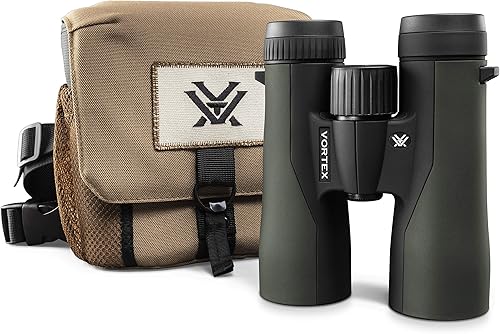
Choose this for wildlife stops, open trails and general outdoor viewing. The included GlassPak harness gives you a ready carry setup.
Pros
- Waterproof and fogproof construction
- Harness and neck strap included
- Tripod adaptable
Cons
- More visible hand movement than with an 8x model
Vortex Crossfire HD 8x42: Best for first-time wildlife watchers
- 8x magnification
- 42mm objective lenses
- Waterproof and fogproof
- Tripod adaptable
A sensible starting point for following wildlife by hand. Lower magnification favors a steadier view, while rubber armor and weather protection suit regular outdoor use.
Pros
- Manageable magnification for handheld scanning
- GlassPak carry gear included
- Tripod adaptable
Cons
- 14mm eye relief leaves less room for glasses than several alternatives
Celestron Nature DX 8x42: Best for backyard birders
- 8x magnification
- 6.5 ft close focus
- Phase-coated BaK-4 prisms
- Waterproof and nitrogen-purged
The close-focus distance makes this useful for nearby feeders, butterflies and garden wildlife. Its wide angular view also helps you follow moving birds.
Pros
- Focuses as close as 6.5 ft
- 7.4-degree angular field of view
- Tripod adapter socket
Cons
- Tripod adapter is not included
Nikon PROSTAFF P3 8x42: Best for glasses wearers

- 8x magnification
- 20.2mm eye relief
- Turn-and-slide eyecups
- Waterproof and fogproof
Start here if you keep your glasses on while viewing. Long eye relief and adjustable eyecups provide more room to find a comfortable eye position.
Pros
- Longest eye relief among these picks
- Turn-and-slide eyecups
- 1.3 lb weight
Cons
- Less image magnification than the 10x and 12x options
Bushnell H2O Xtreme 10x42: Best for shoreline wildlife watching

- 10x magnification
- IPX7 waterproof protection
- Nitrogen-purged
- Soft non-slip grips
A useful choice for watching waterbirds from shore or viewing wildlife around wet launch areas. Rubber armor and soft grips help with damp handling.
Pros
- IPX7 waterproof protection
- Fully multi-coated optics and BaK-4 prisms
- Case, strap and lens covers included
Cons
- Higher magnification makes movement from your hands or a boat more visible
Vortex Triumph HD 12x50: Best for stationary distant viewing

- 12x magnification
- 50mm objective lenses
- Waterproof and fogproof
- Tripod adaptable
Choose this for distant subjects viewed from a settled position. Tripod adaptability matters more here because stronger magnification also enlarges hand movement.
Pros
- Highest magnification in this group
- Tripod adaptable
- GlassPak harness included
Cons
- Less forgiving for quick handheld scanning
- 16mm eye relief offers less room than the Nikon
Bushnell H2O 10x42: Best for damp campsite viewing

- 10x magnification
- IPX7 waterproof protection
- Textured rubber housing
- Fully multi-coated optics
This weather-focused option suits viewing near camp when carrying weight matters less. Its textured grip and twist-up eyecups support a straightforward setup.
Pros
- IPX7 waterproof protection
- Nitrogen-purged optical system
- Textured grip areas
Cons
- 907 g weight adds to a hiking load
- 15.6mm eye relief gives glasses wearers less room
Vortex Triumph HD 10x42: Best for mixed outdoor outings
- 10x magnification
- 42mm objective lenses
- Waterproof and fogproof
- Adjustable GlassPak harness included
Choose this for wildlife stops, open trails and general outdoor viewing. The included GlassPak harness gives you a ready carry setup.
Pros
- Waterproof and fogproof construction
- Harness and neck strap included
- Tripod adaptable
Cons
- More visible hand movement than with an 8x model
The Vortex Triumph HD 10x42 suits someone who wants one pair for trail overlooks, wildlife stops and general outdoor viewing. Its included GlassPak harness is useful when you want binoculars ready throughout a walk rather than buried in a pack.
Adjustable rubber eyecups and a diopter let you fit the view to your eyes. The fully multi-coated optical system is paired with a rubber-armored polycarbonate body, and Vortex describes the construction as shockproof.
The stronger magnification makes sense when you pause to examine a distant animal or landscape feature. Brace your elbows or lean against a stable support before deciding that a subject needs even more magnification.
Skip this pick if quick handheld scanning is your priority. Following a bird between nearby branches is often easier with lower power, especially while you're still learning to bring binoculars onto a subject.
It's a practical general-purpose choice, but the harness shouldn't decide the purchase if the view feels hard to hold. Our Vortex Triumph HD 10x42 review covers its fit in more detail.
Vortex Crossfire HD 8x42: Best for first-time wildlife watchers
- 8x magnification
- 42mm objective lenses
- Waterproof and fogproof
- Tripod adaptable
A sensible starting point for following wildlife by hand. Lower magnification favors a steadier view, while rubber armor and weather protection suit regular outdoor use.
Pros
- Manageable magnification for handheld scanning
- GlassPak carry gear included
- Tripod adaptable
Cons
- 14mm eye relief leaves less room for glasses than several alternatives
The Vortex Crossfire HD 8x42 is a sensible first pair for wildlife watchers who expect to scan by hand. Its lower magnification makes small hand movements less distracting, which helps when you're learning to keep a subject in view.
The roof-prism design, fully multi-coated lenses and rubber armor provide a straightforward outdoor package. Waterproof and fogproof construction suits walks where rain or damp vegetation is part of the day.
Included GlassPak carry gear, covers and a neck strap help keep the binoculars accessible and protected between stops. Tripod adaptability also gives you an option for settled viewing rather than requiring every session to be handheld.
Glasses wearers should be cautious about the 14mm eye relief. If your glasses hold your eyes too far from the eyepieces, you may lose the outer part of the view even when the center looks sharp.
Choose this for an uncomplicated introduction to wildlife viewing, but favor the Nikon if glasses fit leads your decision. Our Crossfire HD 10x42 review covers the separate higher-power version, rather than this exact model.
Celestron Nature DX 8x42: Best for backyard birders
- 8x magnification
- 6.5 ft close focus
- Phase-coated BaK-4 prisms
- Waterproof and nitrogen-purged
The close-focus distance makes this useful for nearby feeders, butterflies and garden wildlife. Its wide angular view also helps you follow moving birds.
Pros
- Focuses as close as 6.5 ft
- 7.4-degree angular field of view
- Tripod adapter socket
Cons
- Tripod adapter is not included
The Celestron Nature DX 8x42 is the most useful choice here for birders who also watch nearby garden wildlife. Its 6.5 ft close-focus distance lets you examine subjects that a binocular with a longer minimum focus distance cannot bring into focus.
That matters at feeders, along flower beds and when a butterfly lands close to your path. You can stay where you are rather than stepping backward just to sharpen the subject.
A 7.4-degree angular field of view supports finding and following moving birds. Fully multi-coated lenses and phase-coated BaK-4 prisms are part of its optical design, with weather protection for outdoor use.
Twist-up eyecups and 17.5mm eye relief give you room to adjust your viewing position. A tripod socket supports longer sessions, though you'll need an adapter separately.
Skip it if your main goal is examining distant, stationary subjects across open ground. Its strengths favor accessible handheld birding and close nature observation; our best binoculars for bird watching guide offers more birding-focused choices.
Nikon PROSTAFF P3 8x42: Best for glasses wearers
- 8x magnification
- 20.2mm eye relief
- Turn-and-slide eyecups
- Waterproof and fogproof
Start here if you keep your glasses on while viewing. Long eye relief and adjustable eyecups provide more room to find a comfortable eye position.
Pros
- Longest eye relief among these picks
- Turn-and-slide eyecups
- 1.3 lb weight
Cons
- Less image magnification than the 10x and 12x options
The Nikon PROSTAFF P3 8x42 is the first model to consider if you keep your glasses on while viewing. Its 20.2mm eye relief is the longest in this group, giving more space between your eyes and the eyepieces.
Turn-and-slide eyecups help you set that distance. Long eye relief improves the chances of seeing the full field with glasses, though your frames and facial shape still affect the fit.
At 1.3 lb, it also deserves attention if you carry binoculars for much of a walk. The fiberglass-reinforced polycarbonate body has rubber armor, while O-ring seals and nitrogen purging provide weather protection.
Nikon pairs multilayer-coated lenses with a silver-alloy prism coating. Its field of view covers 377 ft at 1,000 yds, useful for locating wildlife before you settle on a single subject.
Skip it if your usual viewing calls for more image scale at long distances. For birding, sports and nature walks with glasses, its fit is the stronger reason to buy; see our Nikon PROSTAFF P3 8x42 review.
Bushnell H2O Xtreme 10x42: Best for shoreline wildlife watching
- 10x magnification
- IPX7 waterproof protection
- Nitrogen-purged
- Soft non-slip grips
A useful choice for watching waterbirds from shore or viewing wildlife around wet launch areas. Rubber armor and soft grips help with damp handling.
Pros
- IPX7 waterproof protection
- Fully multi-coated optics and BaK-4 prisms
- Case, strap and lens covers included
Cons
- Higher magnification makes movement from your hands or a boat more visible
The Bushnell H2O Xtreme 10x42 suits shoreline wildlife watchers who expect spray, wet hands or rain. Its IPX7 waterproof protection, nitrogen purging and soft non-slip grips address those conditions directly.
The optical system combines fully multi-coated glass surfaces with BaK-4 prisms. A case, strap and lens covers are included, so you have a way to protect the binoculars during transport and between viewing stops.
From a stable shore position, the magnification can help you examine waterbirds farther out. On a moving boat, that same power enlarges movement from the deck as well as movement from your hands.
Skip it if most of your viewing happens from an unsteady platform. A lower-power binocular is often the more comfortable choice there, even when water protection remains essential.
Use the strap around docks and launch areas, and don't treat waterproof construction as permission to leave the binoculars soaking. Our guide to waterproof and fogproof binoculars explains what protection can and cannot do.
Vortex Triumph HD 12x50: Best for stationary distant viewing
- 12x magnification
- 50mm objective lenses
- Waterproof and fogproof
- Tripod adaptable
Choose this for distant subjects viewed from a settled position. Tripod adaptability matters more here because stronger magnification also enlarges hand movement.
Pros
- Highest magnification in this group
- Tripod adaptable
- GlassPak harness included
Cons
- Less forgiving for quick handheld scanning
- 16mm eye relief offers less room than the Nikon
The Vortex Triumph HD 12x50 suits distant viewing from a settled position. Its 12x magnification and 50mm objectives make it the specialist choice here for people prepared to support the view.
Tripod adaptability is a meaningful feature for this use. With compatible mounting gear, you can spend more time studying one area without holding the binoculars at eye level throughout the session.
The package includes a neck strap and adjustable GlassPak harness for carrying between stops. Adjustable eyecups and a diopter support setup, while waterproof and fogproof construction suits outdoor observation.
Skip this model for a first pair used mainly on woodland walks. Higher power makes it harder to recover a moving subject when you lose it, and the binoculars weigh 1.6 lb before adding any support gear.
Don't choose it just because it has the largest front lenses. Stronger magnification also affects the light reaching your eye, so a larger objective doesn't automatically mean a brighter-looking image than every lower-power alternative.
Bushnell H2O 10x42: Best for damp campsite viewing
- 10x magnification
- IPX7 waterproof protection
- Textured rubber housing
- Fully multi-coated optics
This weather-focused option suits viewing near camp when carrying weight matters less. Its textured grip and twist-up eyecups support a straightforward setup.
Pros
- IPX7 waterproof protection
- Nitrogen-purged optical system
- Textured grip areas
Cons
- 907 g weight adds to a hiking load
- 15.6mm eye relief gives glasses wearers less room
The Bushnell H2O 10x42 makes the most sense for damp campsite viewing where carry weight is less pressing. Its textured rubber housing gives you grip areas on the sides and bridge, with an aluminum chassis beneath.
IPX7 waterproof protection and nitrogen purging suit wet outdoor settings. Fully multi-coated optics and BaK-4 prisms round out the optical package, while center focus and twist-up eyecups provide familiar adjustments.
Its 12 ft close-focus distance matters if you watch nearby birds or insects. A subject inside that distance won't come into focus, making the Celestron a better match for close garden observation.
Skip this model for long hikes if pack weight already concerns you. At 907 g, it's heavier than several alternatives here, and that weight still travels with you when the binoculars spend an hour unused.
Glasses wearers should also consider its 15.6mm eye relief before choosing it. Buy for the grip and weather-focused design when those meet your needs, rather than assuming every waterproof pair handles the same way.
How should you choose binoculars under 200 dollars?
Match the binoculars to your usual subject and viewing position before comparing extras. A comfortable pair you can aim quickly is more useful than a more powerful pair that stays in its case.
Which magnification suits binoculars under 200 dollars?
Start with 8x for moving subjects and handheld scanning. Choose 10x for more image scale across open ground, or consider 12x when you plan to observe from a supported position.
Magnification enlarges movement as well as the subject. If your hands shake, increasing power can make a distant bird harder to examine because its outline never stays still.
An open landscape doesn't always require high power, either. Finding animals spread across a hillside can favor an easier scanning view before you concentrate on one animal.
How do glasses change the choice?
Eye relief and eyecup position determine how comfortably you can see the whole view with glasses. Too little usable space can leave you looking through a smaller circle even when the image itself is in focus.
Keep glasses on if you need them to correct astigmatism. A binocular's focus adjustment can compensate for some differences in sharpness, but it doesn't replace that correction.
Start with the eyecups lowered when wearing glasses, then adjust as needed to avoid dark edges. Our guide to what eye relief means explains why the measurement is a starting point rather than a fit guarantee.
Which optical features deserve attention?
Look at coatings alongside magnification, fit and the kind of viewing you do. Anti-reflective lens coatings reduce light lost to reflections, while phase coatings address an optical effect in roof prisms.
Terms such as HD aren't a universal grade that lets you rank every brand on the same scale. Don't choose between two pairs solely because one name sounds more advanced.
Objective size also needs context. The front lenses affect light collection and bulk, but the usable view depends on the whole optical system and how well you position your eyes.
Our guide to what binocular numbers mean explains the format labels without treating them as a complete measure of quality.
When does close focus matter?
Close focus matters for feeders, butterflies and wildlife near a trail. It matters much less when you mostly view distant shorebirds or animals across a valley.
Think about where subjects actually appear around your home or regular walking route. A distant-viewing strength won't help when the bird you want to study lands too close to focus.
What should you carry on a long walk?
Choose a carry method that keeps binoculars accessible without becoming uncomfortable. A neck strap is simple, while a harness spreads the load across more of your upper body.
Adjust the carry height so the binoculars don't swing into rocks or bounce against your torso. Include the case, water and any tripod gear when deciding how much weight you want to take.
How do you set up binoculars for a clear view?
Set the barrel spacing, eyecups and focus before judging image quality. A poor fit can cause dark edges, eyestrain or a blurred view even when the binoculars are working properly.
Set the spacing and eyecups first
Move the hinged barrels until the two views merge into one round image. If you see two overlapping circles, change the spacing rather than trying to force your eyes to combine them.
With glasses off, begin with the eyecups raised; with glasses on, begin with them lowered. Move through the available positions until you can see the full circle without black crescents appearing.
Adjust the diopter for your eyes
Use a stationary subject with clear detail, such as lettering or a textured tree trunk. On models with a diopter, follow the manual's sequence to focus one side, then match the other to your second eye.
Don't assume the adjustment works on the same side of every binocular. Once set, the diopter normally stays in place while the main focus control handles changes in subject distance.
Avoid aiming through a closed window for this step. Window glass can soften the view and add reflections that make a good focus setting harder to judge.
Our guide to focusing binoculars walks through the process.
Practice finding subjects before a trip
Look at your subject with your unaided eyes, keep looking at it, then raise the binoculars into that line of sight. Searching through the eyepieces from a random starting point is slower.
For steadier viewing, bring your elbows toward your body and keep your shoulders relaxed. At a viewing stop, a safe, stable support can help more than tightening your grip.
Never aim binoculars at the sun. Magnified sunlight can cause serious eye injury.
How should you care for outdoor binoculars?
Remove grit before wiping lenses, and let damp binoculars dry before closing the case. Careful cleaning protects the coatings, while dry storage helps prevent moisture problems.
Use covers when the binoculars aren't in use, especially on dusty trails or in a sandy bag. A cloth that shares a pocket with grit can scratch a lens even if it began clean.
Use a blower or soft lens brush to lift loose particles first. Then use a clean lens cloth and suitable optical cleaner as the manual directs, with light pressure rather than repeated dry rubbing.
Avoid shirts, paper towels and household glass cleaners. Our binocular cleaning guide explains how to handle smears without dragging dirt across the glass.
After a wet outing, wipe the exterior and let the binoculars and carry gear air-dry. Internal fog resistance doesn't prevent condensation on exposed glass when you move between warm and cold spaces.
If internal haze persists after the outside has dried, seek service rather than opening the body. Taking it apart can disturb alignment and weather seals.
Which buying mistakes should you avoid?
Avoid choosing by the largest number or the longest feature list. The common mistakes are about matching the format to the job, rather than finding one more accessory.
- Buying extra power for every situation. More magnification can make a moving bird harder to keep in view and makes hand movement more obvious.
- Ignoring glasses fit. A sharp center image isn't enough if you can't see the edges comfortably.
- Comparing field-of-view figures without units. A figure in feet needs a stated viewing distance for a fair comparison; an angular figure uses degrees.
- Confusing waterproofing with a dry outer lens. Rain and condensation can still obscure exposed glass.
- Forgetting support hardware. Tripod-adaptable binoculars still need compatible mounting parts and a suitable tripod.
- Choosing a harness before the binoculars. Carry gear helps you use a pair more often, but it can't correct an uncomfortable eye position.
- Expecting binoculars to see through darkness. Larger lenses collect available light; they don't create it or turn these models into night-vision devices.
Check the exact model name before ordering, particularly within a family that includes several sizes. Advice about one magnification or generation doesn't automatically apply to another.
Which binoculars under 200 dollars should you choose?
Choose the best binoculars under 200 dollars by your most frequent outing. Give a daily need, such as viewing with glasses or following backyard birds, more weight than an occasional use you might try later.
- Mixed trails and wildlife stops: choose the Vortex Triumph HD 10x42 if you want general outdoor reach and ready carry gear.
- Learning to find and follow wildlife: choose the Vortex Crossfire HD 8x42, provided its eye relief suits you.
- Feeders and nearby nature: choose the Celestron Nature DX for its close-focus ability.
- Keeping glasses on: start with the Nikon PROSTAFF P3.
- Shoreline viewing in wet conditions: choose the Bushnell H2O Xtreme.
- Distant subjects from a settled position: choose the Triumph HD 12x50 and plan for support.
- Viewing around a damp camp: consider the Bushnell H2O when its weight won't burden your day.
If you're still split between formats, use our 8x42 vs 10x42 comparison to make the final magnification choice. Then prioritize a full, comfortable view over another feature on the box.
Our top 3 picks at a glance
-
1
-
2
-
3
Frequently asked questions
Are binoculars under 200 dollars good enough for birding?
Yes, binoculars under 200 dollars can serve backyard birding and regular nature walks. Start with an 8x model for manageable handheld viewing, then compare close focus for nearby feeders and eye relief for glasses.
The Celestron Nature DX is especially useful when your interests include nearby birds, butterflies and garden wildlife.
Should I choose 8x42 or 10x42 binoculars?
Choose 8x42 for following moving birds, scanning woods and keeping hand movement manageable. Choose 10x42 when distant subjects matter more and you can hold a steady position.
Your usual viewing setting matters more than the larger number, as our 8x42 vs 10x42 comparison explains.
Are waterproof binoculars worth choosing?
Yes, waterproof binoculars are worth choosing for rain, spray and damp outdoor use. Fogproof construction addresses moisture inside the binoculars, but exposed lenses can still collect droplets or condensation.
Keep covers handy and dry the body before storage; our waterproof and fogproof binoculars guide explains the differences.
What do 10x42 numbers mean?
The first number describes magnification: 10x makes a subject appear about 10 times larger than it does to your unaided eye. The second number gives the front lens diameter in millimeters.
Neither figure tells you the field of view or eye relief, so use our binocular numbers guide alongside those measurements.